© 2026 Amari | Aimstorms

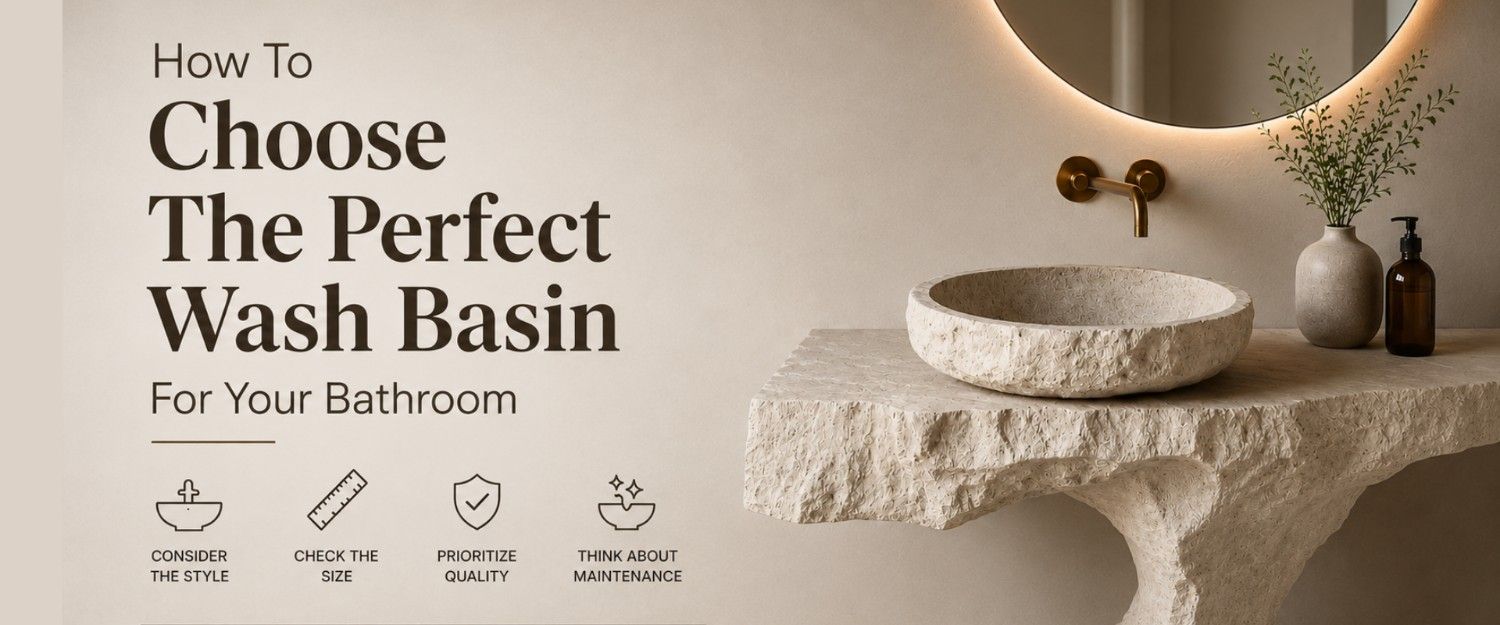
HOW TO CHOOSE THE PERFECT WASH BASIN FOR YOUR BATHROOM
Our bathroom is more than just a functional space — it is a personal retreat, a daily ritual, and in many homes, a quiet statement of style. At the centre of it all sits the wash basin, a fixture so commonly overlooked during the planning phase yet so deeply felt once you live with it every day. Choose the right one, and every morning feels effortless. Choose the wrong one, and you notice it every single time you reach for the tap.
This guide walks you through everything you need to know to make a confident, informed decision — from understanding basin types to sizing, materials, plumbing considerations, and finding a brand that actually delivers on its promises.
Why Your Wash Basin Choice Matters More Than You Think
Most homeowners spend considerable time selecting tiles, paint colours, and vanity units — but the wash basin often becomes an afterthought. That is a mistake. The basin influences the visual weight of the entire bathroom, affects how much counter space you have, determines how easy cleaning will be, and even plays a role in water usage. Getting this choice right from the beginning saves both money and frustration down the line.
Step 1: Understand the Different Types of Wash Basins
Before anything else, you need to know what is available. The market today offers several distinct styles, each suited to different bathroom layouts, tastes, and practical needs.
Counter Top Basin
A Counter top basin sits on top of a vanity unit or shelf rather than being built into it. This style has surged in popularity over the last decade, and for good reason. It creates a bold, design-forward look that instantly elevates a bathroom's aesthetic. Because the basin rests above the surface, it becomes a visual focal point rather than blending into the background.
Counter top basins work particularly well in modern and minimalist bathrooms where clean lines and deliberate design choices define the space. They pair beautifully with floating vanity units, raw wood shelves, or sleek stone countertops.
From a practical standpoint, a counter top wash basin is relatively straightforward to install and replace if needed. However, the gap between the basin and the counter surface does require regular cleaning to prevent soap scum and moisture build-up. If low maintenance is a priority, consider a basin with a smooth, non-porous surface — ceramic and stone resin options from brands like Amaribath are designed with exactly this in mind.
Under-Counter Basins
These are fitted beneath the countertop surface, creating a seamless, integrated look. They are extremely easy to wipe clean since there is no rim catching water or soap residue. Under-counter basins suit bathrooms where a streamlined, hotel-like finish is the goal.
Wall-Hung Basins
Mounted directly to the wall without any vanity unit below, wall-hung basins are excellent for small bathrooms. They free up floor space, make cleaning the floor much easier, and can be positioned at any height — a practical advantage for households with mixed accessibility needs.
Free Standing Basins
Perhaps the most striking option available today, Free standing basins are exactly what the name suggests — basins that stand entirely on their own, supported by a pedestal or column base, requiring no wall mounting or vanity unit for structural support.
Free standing basins make an architectural statement. They work brilliantly in larger bathrooms, en-suites, and boutique-style spaces where you want the basin itself to be a piece of design rather than just a utility. They pair naturally with exposed pipework in an industrial setting or with ornate tap fixtures for a more classical feel.
One consideration with free standing basins is plumbing. Since the basin is not attached to a wall or vanity, the water supply and waste pipes need to come up through the floor or be concealed within the pedestal. Planning this during a renovation is straightforward; retrofitting in an existing bathroom may require more work.
Amaribath offers a carefully curated range of free standing basins that balance sculptural design with functional depth — meaning you get something that looks extraordinary without sacrificing day-to-day usability.
Step 2: Get the Size Right
Sizing is where many people go wrong. A basin that looks perfect in a showroom can feel overwhelmingly large — or frustratingly small — in your actual bathroom.
As a general guide:
Small bathrooms (under 4 square metres): Opt for compact wall-hung or slim counter top wash basins, typically 45–50 cm wide.
Medium bathrooms: A standard counter top basin between 50–60 cm offers good usability without dominating the space.
Large bathrooms or en-suites: Here is where you can afford to be expressive. A wide free standing basin or a double counter top wash basin arrangement becomes both practical and dramatic.
Always measure your available wall or counter space, and factor in clearance on either side — at least 20 cm is recommended for comfortable use.
Step 3: Choose the Right Material
The material of your basin affects its longevity, appearance, and maintenance requirements.
Ceramic is the most common choice — durable, hygienic, and available in a wide range of shapes. It resists staining and is easy to clean. Most of Amaribath's popular counter top basin range is crafted from high-fired vitreous china, which offers exceptional hardness and a glass-like surface finish.
Stone Resin is a composite material that mimics the look and feel of natural stone while being lighter and more resistant to chips and cracks. It has a matte, warm aesthetic that works well in spa-inspired bathrooms.
Natural Stone (marble, granite, travertine) is undeniably beautiful but requires sealing and more attentive care. It suits luxury projects where long-term investment in maintenance is acceptable.
Tempered Glass creates a striking visual effect, particularly in contemporary bathrooms. It is less common but adds genuine drama when used well.
Step 4: Think About Tap Compatibility
Your basin and taps need to work together — both visually and practically. Check whether the basin you choose has a pre-drilled tap hole, multiple holes for a three-piece tap set, or no holes at all (for wall-mounted taps).
Counter top basins often look best with tall basin taps that match the elevated height of the bowl. Free standing basins may require floor-standing or wall-mounted tap fixtures depending on the design.
Amaribath provides detailed compatibility guides with each basin, making it easy to select coordinating taps without guesswork.
Step 5: Consider Your Plumbing Setup
It sounds obvious, but your existing plumbing layout can significantly limit — or open — your choices. Before falling in love with a particular basin style, understand where your waste pipe exits (floor or wall) and where your water supply enters the room.
Wall-hung and under-counter basins typically work with standard plumbing configurations. Free standing basins may need floor plumbing. Counter top wash basins are generally the most flexible, as they sit above a vanity unit that can house and conceal the pipework below.
If you are working with a plumber during a renovation, share your preferred basin choice early so the rough-in plumbing can be positioned correctly from the start.
Why Amaribath Stands Out
When it comes to selecting a reliable brand, Amaribath has built a strong reputation for combining thoughtful design with genuine build quality. Their range spans everything from sleek, minimal counter top wash basins to bold, architectural free standing basins — making them a practical one-stop destination whether you are renovating a compact apartment bathroom or designing a luxury master en-suite.
What sets Amaribath apart is not just the breadth of their catalogue but the consistency of finish and fit. Each piece is designed with installation in mind, meaning the dimensions, fixing points, and overflow placements are practical rather than just aesthetic. For homeowners and interior designers alike, this reliability reduces the stress of the specification process considerably.
Their counter top basin collection, in particular, has been praised for the depth of the bowl — a detail that sounds minor until you realise how much splashing a shallow basin creates over time.
Quick Buying Checklist
Before finalising your purchase, run through this checklist:
Have you measured the available space accurately?
Does the basin style suit the overall bathroom aesthetic?
Is the material appropriate for your maintenance preferences?
Have you confirmed tap hole compatibility?
Does your plumbing support the basin type you have chosen?
Have you checked the overflow and waste fitting specifications?
Is the brand offering an appropriate warranty?
Frequently Asked Questions (FAQ)
Q1. What is the difference between a counter top basin and an under-counter basin?
A counter top basin sits on top of the vanity or shelf surface, making it visible as a design element. An under-counter basin is fixed beneath the countertop, creating a flush, seamless surface. Counter top basins tend to be bolder in appearance, while under-counter options offer a cleaner, more integrated look.
Q2. Are free standing basins suitable for small bathrooms?
Generally, free standing basins work best in medium to large bathrooms because they require floor space on all sides and need floor plumbing. However, compact pedestal-style free standing basins do exist and can work in a slightly larger small bathroom if chosen carefully. Always measure before purchasing.
Q3. How do I clean a counter top wash basin effectively?
Use a non-abrasive liquid cleaner and a soft cloth for regular cleaning. Avoid harsh chemicals or scouring pads, especially on ceramic and stone resin surfaces, as these can dull the finish over time. Wiping down the basin daily — particularly the junction between the basin and the counter — prevents soap and limescale build-up.
Q4. Can I install a free standing basin myself?
While the basin itself can often be positioned without specialist skills, the floor plumbing connections should ideally be handled by a qualified plumber. Incorrect waste pipe connections can lead to leaks that cause serious damage over time.
Q5. What tap height should I choose for a counter top basin?
Since a counter top basin raises the bowl height above the vanity surface, standard-height taps can sometimes feel too short. As a rule, choose a tap with a spout height that comfortably clears the rim of the basin — typically a tall or high-spout basin tap works best.
Q6. Does Amaribath offer basins for both modern and traditional bathroom styles?
Yes. Amaribath's product range spans contemporary, transitional, and classic designs. Whether you are fitting a sleek minimalist bathroom with sharp-edged counter top basins or a more traditional space that calls for a rounded, pedestal-style free standing basin, their catalogue covers both ends of the spectrum.
Q7. What is the average lifespan of a ceramic wash basin?
A good-quality ceramic basin, properly maintained, can last 20 to 30 years or more. The key factors affecting longevity are the quality of the firing during manufacture, the care taken during installation, and how well the basin is cleaned and maintained over its life. Brands like Amaribath use high-fired vitreous china that performs exceptionally well over long periods.
Q8. Is a counter top wash basin more expensive than a wall-hung basin?
Not necessarily. Price varies based on material, size, brand, and design complexity rather than the mounting style alone. Entry-level counter top basins can be very affordable, while premium free standing basins can be significant investments. Setting a clear budget before browsing helps narrow down the options efficiently.
Final Thoughts
Choosing the perfect wash basin comes down to three things working together: the right style for your bathroom's aesthetic, the right size for your available space, and the right material for your lifestyle. Whether you are drawn to the bold statement of a free standing basin, the design-forward appeal of a counter top basin, or the clean integration of an under-counter option, taking the time to evaluate each factor properly pays off in a bathroom that feels exactly right — every single day. Brands like us Amaribath make this process easier by offering a considered range of products that do not force you to compromise between form and function. Browse their full collection, take your measurements seriously, and trust the process — your ideal wash basin is out there.

To offer people the most sustainable ways to enjoy water.
NAVIGATION
ADDRESS
SUDHARA SANITATION PVT LTD
E-28, Sector-11, Noida - 201301