© 2026 Amari | Aimstorms

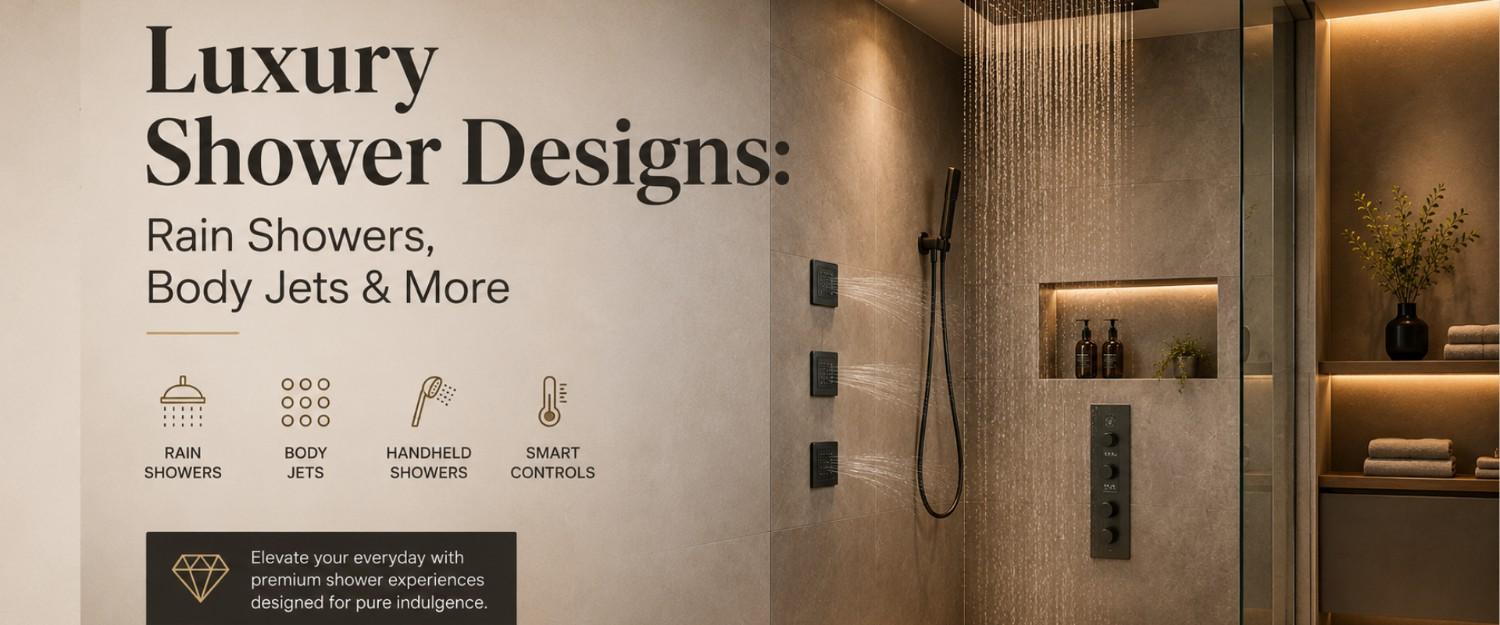
LUXURY SHOWER DESIGNS: RAIN SHOWERS, BODY JETS AND MORE
A shower used to be one of the most overlooked parts of a bathroom. It was functional, it was fixed, and nobody really gave it much thought beyond whether the pressure was good or the water stayed hot. That has changed quite dramatically in recent years. Today, the shower is often the single most considered element in any bathroom renovation. It sets the tone for the entire room, reflects personal taste, and — when designed well — turns a daily routine into something genuinely enjoyable. Luxury shower design is no longer the exclusive preserve of five-star hotels. With the right fixtures and a little planning, it is entirely achievable at home.
At Amari Bath, we work with homeowners, interior designers, and contractors who are all after the same thing: a shower that looks exceptional and performs even better. This guide covers the key elements of luxury shower design — from rain showers and ceiling showers to body jets and everything in between.
What Makes a Shower "Luxury"?
The word luxury gets used loosely, but in the context of shower design it means something specific. A luxury shower is not simply an expensive one — it is one that combines thoughtful design, quality materials, and a multi-sensory experience. The best luxury showers share a few traits: they use water intelligently across multiple points of contact, they are controlled with precision (usually through thermostatic valves), they integrate visually with the rest of the bathroom, and they are built from materials that age gracefully without constant maintenance.
Once you understand those principles, the actual fixtures — rain heads, body jets, handheld sprays — all start to make more sense as part of a cohesive whole rather than individual add-ons.
Rain Showers: The Cornerstone of Luxury Shower Design
If there is one fixture that most people associate with a luxury shower, it is the rain shower head. And for good reason — nothing quite replicates the sensation of standing beneath a wide, evenly distributed flow of water that mimics natural rainfall.
Rain showers are available in a range of sizes, from compact 200mm heads suited to smaller enclosures, all the way up to 600mm and beyond for statement installations in larger bathrooms. The general rule is simple: the bigger the head, the more immersive the experience. A wide rain head covers your shoulders, arms, and head simultaneously, which is a fundamentally different experience from a narrow-beam standard showerhead. What makes a great rain shower is the quality of its internal channels. Premium rain heads distribute water uniformly across every nozzle — no dry spots, no uneven pressure. The result is a consistent, soothing flow that you can stand under for far longer than you intended.
When selecting a rain shower for your space, consider the finish as carefully as the size. Chrome is the timeless choice — easy to clean, universally compatible, and always sharp-looking. Brushed nickel and matte black are growing strongly in contemporary bathrooms, while brushed gold works beautifully in warmer, more eclectic interiors.
Explore Amari Bath's range of rain showers and body jets to find sizes and finishes suited to your bathroom.
Ceiling Showers: When Architecture and Bathing Meet
Ceiling showers take the rain shower concept one step further. Rather than mounting the head on an overhead arm or a wall-mounted extension, the showerhead is recessed directly into — or surface-mounted flush against — the ceiling itself. The result is visually striking. There is no visible arm, no visible pipework, and nothing interrupting the clean lines of the shower enclosure. Water simply appears from above, as if it were always meant to be there.
Ceiling showers are particularly well-suited to wet rooms, open-plan shower spaces, and bathrooms with high ceilings where a standard wall-mounted fixture would look out of proportion. They work best when planned at the build or renovation stage, since supply pipework needs to be routed through the ceiling — something that is far easier before tiles go up. For those who love minimal, architectural interiors, a ceiling shower is often the first specification on the list. Paired with frameless glass panels and a clean-lined thermostatic valve, the effect is effortlessly refined.
Shower Body Jets: Spa-Level Hydrotherapy at Home
Rain showers cover you from above. Body jets cover you from the sides. Together, they create a fully immersive shower experience that closely resembles what you would find in a high-end spa or wellness retreat.
Body jets are fixed to the shower wall at strategic heights — typically targeting the lower back, mid-torso, and shoulders. When activated, they spray a targeted horizontal flow of water that works on muscle tension in a way that an overhead shower simply cannot.
The practical benefits are real. If you deal with back stiffness in the morning, stand for long periods at work, or exercise regularly and want a faster post-workout recovery, body jets make a meaningful difference. The hydrotherapy effect — warm water pressure applied directly to muscle groups — improves circulation and reduces tension without any effort on your part.
From a design standpoint, body jets are sleek and unobtrusive when not in use. Most are small, round, and surface-mounted, sitting flush against the tile so they disappear into the wall. Good-quality jets have flexible rubber nozzles that resist limescale and are easy to clean with a quick wipe.
For the best results, body jets should be paired with a thermostatic diverter valve that allows you to control which outlets are active simultaneously. Running body jets alongside a rain shower creates an enveloping experience — water from above and from the sides, all at a consistent temperature.
Multi-Function Shower Panels and Column Systems
For those who want a complete shower transformation without committing to an in-wall installation, shower panels and column systems offer a compelling alternative.
A shower panel is a single vertical unit that mounts to the wall and integrates multiple functions — a fixed rain head at the top, body jets at various heights along the panel, and a handheld outlet at the bottom. Everything is self-contained, everything connects to a single supply point, and the result is a fully functional luxury shower system with minimal installation complexity.
Column systems work similarly but tend to be more modular — you can specify the combination of outlets, the height of the column, and the finish. They are particularly popular in bathroom refurbishments where opening walls is not practical.
Both options are available across a range of finishes and styles, from industrial-look matte black to warm brushed brass.
Thermostatic Control: The Detail That Changes Everything
No luxury shower design is complete without the right valve. A thermostatic shower valve does two important things that a standard valve cannot: it locks in your preferred temperature and maintains it regardless of pressure fluctuations elsewhere in the system, and it separates temperature control from flow control so you can manage each independently.
This matters more than most people realise before they experience it. With a thermostatic valve, you set your temperature once and it is there every time. No more adjusting, no sudden blasts of cold water when someone runs a tap elsewhere in the house, and — critically — a much safer showering environment for children and elderly family members.
Thermostatic valves are available in two, three, and four-outlet configurations. A two-outlet valve handles a rain head and handheld; a four-outlet version gives you the full setup — rain head, body jets, handheld, and a secondary overhead or side spray.
The valve itself can also be a design statement. Exposed thermostatic valves with twin or triple controls are one of the most visually striking elements in a luxury shower. The right valve in the right finish ties the entire scheme together.
Designing Your Luxury Shower: Key Considerations
Before you start specifying fixtures, a few practical considerations will save time, money, and frustration:
Enclosure size — Body jets need wall depth and room to spray effectively. A minimum 900mm x 900mm footprint is recommended; 1200mm x 900mm or larger gives you the full experience.
Water pressure — Multi-outlet shower systems require good pressure. Combi boiler systems generally perform well. Gravity-fed systems may need a pump. Confirm with your plumber before purchasing.
Pipework planning — Ceiling showers and concealed valves need supply routes planned before tiling. Getting this right at the start avoids expensive remedial work later.
Finish consistency — Your shower fixtures should coordinate with your basin tap, towel rail, and other bathroom fittings. Mixing finishes can work when done deliberately, but an unplanned mix looks accidental.
Professional installation — Thermostatic valves, multiple outlets, and concealed pipework all require a qualified plumber. Do not cut corners here.
Browse the full range of bathroom fittings and shower collections at Amari Bath to plan your ideal setup.
Frequently Asked Questions
Q: What size rain shower head is best for a home bathroom?
For most home bathrooms, a 300mm to 400mm rain shower head strikes the right balance — wide enough for full coverage without requiring oversized pipework or very high water pressure.
Q: Can I install body jets in an existing shower?
It depends on whether your walls can be opened to route additional pipework. In some cases, surface-mounted panels with integrated body jets are a more practical solution for existing bathrooms.
Q: Is a ceiling shower hard to install?
It is straightforward when planned during a renovation, since supply lines can be routed before ceilings are finished. Retrofitting requires more work but is possible in many cases.
Q: How many body jets do I need?
Four to six jets positioned at torso and lower back height covers most users well. Larger enclosures can accommodate more, but placement matters more than quantity.
Q: Do luxury shower systems use a lot of water?
Running multiple outlets simultaneously does increase consumption. However, most quality shower systems include flow regulators, and you can always run outlets selectively based on how much time you have.
Q: What finish is easiest to maintain on shower fixtures?
Chrome is the most forgiving — water marks and soap residue are easy to wipe clean. Brushed finishes also hide minor marks well. Matte black looks striking but requires a little more attention to keep clean.
Q: Do I need a special valve for a rain shower and body jets together?
Yes — you will need a thermostatic diverter valve with enough outlets to handle both simultaneously. A three or four-outlet thermostatic valve is the typical choice for a full luxury shower setup.
Final Word
Luxury shower design comes down to combining the right components — a quality rain or ceiling shower, well-positioned body jets, and a thermostatic valve that gives you precise, effortless control — within a space that is properly planned and professionally installed.
The investment pays back every single day, not just in comfort but in the way a well-designed bathroom lifts the feel of your entire home. It is one of those upgrades that is easy to overlook during the planning stage and impossible to regret once it is in.
Explore Amari Bath's full collection of rain showers, ceiling showers, and body jets and find the combination that works for your bathroom — or visit our product categories page for the complete range of designer bathroom fittings.

To offer people the most sustainable ways to enjoy water.
NAVIGATION
ADDRESS
SUDHARA SANITATION PVT LTD
E-28, Sector-11, Noida - 201301